Thursday, September 18, 2014

Introduction to the Renaissance


Ah, yes… The Renaissance.

The Renaissance was an intellectual and artistic “rebirth” that began in the city-state of Florence.

Speaking of city-states, Italy was composed of a bunch of those. Venice, Genoa, and Milan were other greatly powerful and economically thriving city-states during the Renaissance. At this time, there was no sense of collective Italian identity – instead, these independent city-states would constantly vie for power.

Italy was a prime location for the renaissance to begin for three main reasons:

1.     Political/military – Italian city-states were constantly striving for a balance of power. Masked as republics, there wasn’t much political stability at this time in these states.

Here’s some terms you should know about government during the time:
• Signori - despots, one man ruler
• Oligarchies - despots, one man rulers
• Popolo - Italian underclass; left heavily taxed and disenfranchised, the popolo used armed force and violence to take over city governments

DEFINITELY NOT...


2.     Intellectual/religious – a reemergence of the classics and a decline in religious focus calls for the spark of an intellectual and artistic movement. The invention of the printing press by Johann Gutenberg also served as an important part of the education movement; as books were printed more quickly, knowledge was more accessible.

3.     Social/economic – Italian society was thriving. The city-states were economically stable, and trade was huge. This is why port cities especially saw the most of the Renaissance.


The Renaissance was based upon three major ideals that changed man’s way of thinking. I’ll make it easy for you.

INDIVIDUALISM – I am important. My life is mine alone, and I should enjoy it and focus on bettering myself. My liberties, rights, and actions are mine alone, and they are important.

SECULARISM –There may not be an afterlife, so why am I sitting here suffering worrying about what God thinks of me? We should not be ruled by our religion. Sure, we’ll still be Christians, and worship our god, but we also have to focus on things important to man and realize that within our lives there is so much more to do than pray for redemption and await the afterlife.

HUMANISM – Let’s write about, learn about, and study topics that aren’t just religious but also secular and put a focus on humans and the world we live in. Let’s turn away from medieval scholasticism and bring back interest in ancient Greek and Roman thought. We can open up schools and libraries and create art and all sorts of things to better the world and ourselves. Look at all we can learn!

These three ways of thinking led to great developments in science, art, philosophy, literature, astronomy, etc.

They were, in part, caused by the crises that preceded them. The collapse of the Medieval lifestyle incited a focus on the individual and accordingly a life not completely dedicated to religion. Furthermore, the classics began to reemerge at this era, and people quickly began to abandon medieval philosophy and recognize the classics as right.

People also became obsessed with the idea of a perfect man – he would be physically ideal, and an intelligent master of the arts and sciences. Today, we look back on these men who dabbled in science, philosophy, art, math, etc., and call them “Renaissance Men.”

Leonardo Da Vinci would be a fine example of a Renaissance Man.


Whoops… 


Here are some of his works: 


Invention of the Parachute


The Vitruvian Man

 Shows realistic depiction of and anatomical focus on the human body, as well as the “perfect proportions” of man


The Mona Lisa

Here are some other people you should probably know, and some of their works:

Michelangelo – David, Pieta, the ceiling of the Sistine Chapel (shown below)


Raphael – Sistine Madonna, School of Athens (shown below)


à An important depiction of learning and the humanities


Donatello – the bronze David


Batocelli – Birth of Venus


Tuesday, September 16, 2014

Authors, Inventors and Women, oh my!


Although the Renaissance had a plethora of important people, four emerged in the social sphere. The first two were authors. Each one wrote to guide wealthy young men in the world.

Castiglione’s Courtier focused on the social aspects of society. He wrote that young men needed to be trained both physically and spiritually with a background in a broad range of subjects. But no pressure.
Castiglione 1 - Turning young men into gentlemen since 1528
Machiavelli wrote The Prince in order to guide men in the political world. Instead of writing about an idealized government, Machiavelli writes on reality and offers practical advice.

The next influential person was Gutenberg, arguable the most important person in the century. He invented the movable type printing press, which allowed people to easily print any word they could imagine. This method of printing allowed the flow of information leading to the stimulation of literacy in the public. 
What If I Told You Meme - What if I told you  without Gutenberg we would all be illiterate peasants

The mechanical clock also emerged in Europe at this time. This invention was more important to city people than those in the country. It allowed them to schedule their work hours and control how they spent their time. 
one-does-not-simply-a - One does not simply  control the world without a clock

The final person was a woman named Laura Cereta. Cereta was educated with her own literary career by 15. However, she lived with the stigma of being smart in a time when women were supposed to only care about the domestic side of life. Cereta believed that women brought their own inferiority upon themselves. She believed that women had the capability to succeed but keep themselves down. Instead of focusing on parties, women should work to better themselves.

Y U No - Women: Y U no  advance yourselves
Although intellectually the Renaissance was monumental, social matters played a part in the eventual path of history. Without these four influential people, society might have been a different place. 

Monday, September 15, 2014

You Have Potential! You have Potential! The Renaissance


The Renaissance is a time often thought of as a new age of Enlightenment. A time where humans turned away from the primitive Middle Age way of thinking and entered a new era of arts and intellect. However, the Renaissance and its ideas affected only a few people. Those people were none other than the rich and the very elite. Shocker! 


For the people the Renaissance did effect it created three main intellectual hallmarks: individualism, humanism, and secularism. The main concept individualism lead to the other two occurring for once people began accepting their own uniqueness and potential, it lead them to better themselves and humanity through humanism and enjoy the material world through secularism. These three concepts combined lead to a strong belief in humanity's and the individual's potential and uniqueness. 

One of the byproducts of individualism was humanism. Humanism was a new time of learning to "reveal human nature". It was based in the ideas from the classics of ancient Rome and Greece. Petrarch was said to be the godfather of humanism because he realized he was living in a new age and began translating many of these classic documents. 

 
Through the studying human's individualities, the art at this time was also affected. Artists began to stress the human form like the artist of ancient Greece did. However, since they were also living during a time of praising the human form, artists would paint and sculpt the perfect human body. The art was based in realism but also had strong connections to individualism for praising human's uniqueness. 

Thursday, September 11, 2014

Bad Things Come in Threes

The 14th and 15th centuries were plagued with three crises: the Bubonic Plague, the Hundred Years War, and the Great Schism. These three events were the cause of many divisions. People had to choose a side. As a result, Europe during this time was filled with turmoil, panic, chaos, and confusion.

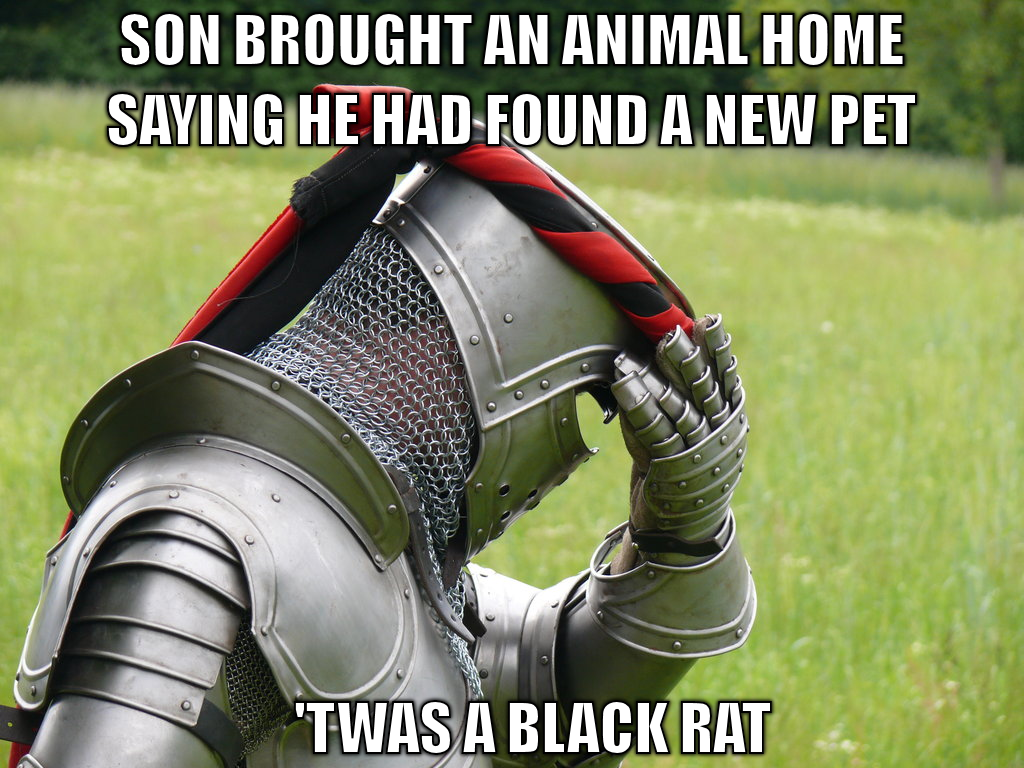
The first evil is the Bubonic Plague or Black Death. I’ll spare you guys horrid images of these terrible inflictions. The Plague arrived in mainland Europe and 1348 and spread through out the continent through ports via rats and fleas. 

Medieval Problems. The "black death" or the plague pandemic that killed millions in 14th century Europe were spread by fleas carried by black rats.. S


As a result of the plague, many were inflicted and Europe suffered a huge population loss. This brings us to our first division: the fight between laborers and businessmen.  Since there was less labor available, those that could work asked for higher wages and revolts broke out. 


Another division rose within the church. The church at this time was becoming more wealthy. Many archbishops and others in high positions would not go near peasants in an attempt to survive.  Basically, they thought they were Regina George or Beyoncé.


This created a disconnect between the people and those who represent the hierarchy of the church. It also hurt the church’s reputation. It seemed as if they were unconcerned for the plight of the laymen. Despite this there were many local priests in the country side who attempted to help those who were sick. So not only was the church ostracized from the people, it was divided within itself.

The second evil is that of the Hundred Years War. https://www.youtube.com/watch?v=01-2pNCZiNk The obvious division here is that of England vs. France. The war increased nationalism within the two countries and hatred between the two countries. The cause of the war: land and power. 
willywonka - OH YOU WANT MONEY AND POWER HOW SURPRISING


The war also had an affect on the political and cultural lives of the two countries. Since King Edward of England kept having to ask Parliament for more and more money, he kept it strong. As a result, a large general assembly became an important part of the English government. On the other hand, the French held smaller assemblies so as not to threaten the power of the king. Although this is not a division between people, it is a division of ideas within Europe. 
The final evil is that of the Great Schism within the church.  Here's the breakdown of what happened:


uncle sam i want you - I want you  excommunicated

Everyone had to choose which pope they were going to recognize. England went for Urban. France (Scotland, Aragon, Castile, and Portugal) went for Clement. The common people were just confused. The church was what held Europe together so since the organization crumbled, so did Europe as a whole.


A house divided cannot stand. As a result, the traditional medieval society in Europe crumbled as evidenced.

Wednesday, May 7, 2014

  • You can check out the above "AP Euro Biographies" link for some people to review for the exam.  
  • These powerpoints were created by former students. If I find more I will update the site. 

Monday, May 5, 2014

Post World War II

World War II created great instability and tension throughout Europe. As a result, the goal of the European countries was to create protective ties among countries, to serve "justice", and to decolonize.

Unions and treaties were created to establish stability in safety and economy. First the Organization for European Economic Cooperation was created to monitor the money given by the United States in the Marshall Plan. The European Coal and Steel Community combined the steel and coal resources of France, West Germany, Italy, Belgium, the Netherlands, and Luxemburg. Similar to the Zollverein, the ECSC was made to regulate economic policies without a political union. From this the European Economic Community was created who lifted all trade restrictions among the countries in the Community. The EEC would eventually be named the European Union who establishes the Euro as the common currency and further cooperation in environmental affairs and defense justice.
The North Atlantic Treaty Organization is a military alliance between the Unites States, Great Britain, France, Canada, Denmark, Belgium, Iceland, Italy, the Netherlands, Portugal, and Norway. This is a defense alliance that agrees to work and defend together if an outside party attacks. This was created for collective security and stability. In response to the creation of NATO, Russia created the Warsaw Pact. This was the collective power of the eight communist states to defend if attacked. Europe and Russia believed of safety in numbers, apparent in the multiple alliances in economy and military aspects.


To break tension between Germany and the rest of Europe, the Nuremburg Trials began. In these trials, active Nazis were persecuted in court concerning their actions in World War II. Though reprimands were served to Germany, only 11 men were prosecuted out of the thousands who participated in the world. But only 11 men were necessary in satisfying the revenge wanted from Europe. The real threat that was growing was Communism.

Decolonization was a period where many great powers pulled their authority from other countries they had ruled. In 1947, Britain had decided to take their troops out of Israel and Palestine. A dislocated people because of the Holocaust, the Jews found a homeland in Israel. Zionism grew and the United Nations gave land to the new Jewish State from the local Arabs. As soon as this was established the state was attacked by Arabic land nearby. This constant fight over the homeland will last until today's news. In Africa, Great Britain still held control until Abdul Nasser declared the Suez Canal nationalized. Eventually, Great Britain allowed Egypt its own leadership. In Sub-Saharan Africa, many countries began to declare their independence from Britain, inspired by Egypt. Even with retaliation of white supremacy, that had grown in Africa, the indigenous people were able to keep their land. For France and the Netherlands, the colonies were more important to reestablish their importance and prestige in Europe. The Netherlands lost Indonesia and France lost Algeria. France eventually splits North and South Vietnam into Communist and Republic as a result of fighting with the nationalist leader Ho Chi Minh.


Post World War II was a time where Europe wanted to return from the destruction to old times but needed new methods in order to achieve those dreams. Alliances were needed to be created while decolonization would help strengthen mother countries. Europe had become too ambitious in its endeavors and a return to the quiet time before the World Wars was wanted by all.

Friday, May 2, 2014

Cold War


The period after World War II was awkward even for the Allies. Events in World War II led to tensions between the Soviet Union and the other Allies. The main reason for this was that the Allies did not help the USSR fight against Hitler and open another front to help the the Soviet Union.

At the Yalta conference Stalin agreed to allow free elections in Eastern Europe, of course he did not keep his promise and instead took control of most of the governments in Eastern Europe.
Yalta
Tito, the dictatorial leader of Yugoslavia, did resist Soviet power to an extent. Despite abiding by many of their rules, he occasionally sought independent policies. He made Yugoslavia the most liberal of the Communist countries, but that is not saying much.

The first major "conflict" of the Cold War was the division and governance of Germany. After WWII, the Allies: the UK, US, France and the USSR, occupied four different zones of Germany. 
The Allies began to realize that Stalin would not obey his promise of letting the other Eastern European countries rule on their own. This was seen in the Communist takeover of Czechoslovakia and Poland in the mid 1940s. Winston Churchill described it as if "an iron curtain had descended across Europe".
After WWII, the Marshall Plan helped provide vital aid for Western European countries (and Yugoslavia) to help them recover in 1948.

The antagonism between powers grew and came to a head in Berlin. Berlin was in an awkward position quite literally. It was firmly in Eastern Germany (what would become the German Democratic Republic), but there was a Western portion of the city. The Soviet Union did not like this and so they blockaded the city in 1948.

In response to this the Allies formed the famous Berlin Airlift which provided supplies and food to the citizens of West Berlin until the Soviet Union lifted their blockade in 1949.
Residents of Berlin awaiting a cargo plane carrying food during the Soviet blockade of the city in 1948–49.
The Soviet Union kept trying to test the boundaries that had been set out for it. Earlier the Truman Doctrine said that the US would help any country resist Communism and had helped Greece and Turkey.
President Eisenhower of the US described how different countries might fall like "dominoes" in his Domino Theory. The US wished to contain Soviet influence, but the USSR thought otherwise. The North Atlantic Treaty (NATO) was formed in 1949 with the US, Canada, Britain and other European countries to provide collective security. In response to this the USSR formed the Warsaw Pact with the Eastern European countries in 1954.

The issue of the Aswan dam also showed Cold War tensions and had the USA and Britain withdrawing their help when Nasser, president of Egypt, also asked the USSR for money.

In 1961 the Berlin Wall was constructed to prevent Eastern German citizens from escaping.

Meanwhile things got very hot in the Cold War with the Cuban missile crisis. President Kennedy and Khrushchev reached an agreement and the Soviets agreed to not put nuclear missiles in Cuba. This showed the extent to which the arms race and the construction of the atomic and later hydrogen bombs had changed foreign relations between nuclear powers.

The Soviet Union also had to deal with many revolutions against their rule in Eastern Europe. One of these included Imre Nagy, a Hungarian who revolted against Soviet rule. The revolt was crushed with Soviet and Warsaw pact troops in 1956. Later on in 1968 the Prague Spring, a revolt led by Alexander Dubcek against Soviet government was crushed again by Soviet and Warsaw troops.
Finally, the revolution that arguably broke the USSR was the Solidarity movement in Poland. Led by Lech Walesa, the Solidarnosc challenged Soviet power. Along with support from Pope John Paul II and Reagan, the USSR began to show signs of weakness. 
The new leader of the USSR, Gorbachev (the previous leader was Brezhnev) brought about two new policies of glasnot (openness) and perestroika (reform) to the USSR. 
Soon large amounts of demonstrations and revolts in Eastern bloc countries forced the Soviets from power. Walesa was made president of Poland, and in Czechoslovakia the Velvet Revolution put Vaclav Havel and Alexander Dubcek in power through a bloodless takeover.
The Berlin Wall was finally torn down in in 1989 after Honecker was forced to resign in East Germany.
  Other  revolutions occurred in countries. By 1990s the Soviet Union had collapsed.