Wednesday, October 22, 2014

Absolutism- yay or nay?

Absolutism was becoming a more popular form of government after the Middle Ages. Kings rules "by divine right," meaning that why were responsible to God alone. Kings had full power and authority. In France, the power of the king and of the bureaucracy expanded, but lacked the idea of the rule of law. Some believed that individual power had to be sacrificed for the safety of the state. Others believed that all of this power in the hands of such a minority could possibly lead to corruption.


Thomas Hobbes believed that absolutism was necessary in order for a nation to succeed. If every individual in a nation had unique opinions and beliefs, they would each have hundreds of enemies. They would have to fight these enemies on their own, with no one to support them because no one had the same exact beliefs. Hobbes believed that in order to have security, each citizen must give up their right to assembly to the king, who will act on their behalf. Individuals on their own, he believed, tended toward evil.


Next up was Bishop Jacques Benigne Bossuet, who wrote Political Treatise. He agreed with absolutism in that the right of rule comes from God and kings must use that power well and not abuse it. He saw the king as the intermediary between God and the people.  Because the king is a representative of God, it is okay to put your faith in him. Citizens have no reason to fear the king unless they have done something wrong. If they ever go against the king, they not only have him to fear but also the fury of God.

Cardinal Richelieu weighed in here too with his piece, Political Testament. When he was elected to the king's Council, he realized that a lot of the nobles were only working for their own benefit, not the king's. This diminished the overall authority of the king and therefore the effectiveness of his rule. Individual interests were were put above the best interest of the state. Richelieu set out to change this and promised the king that he would bring the control of the state back to him. He was a believer in absolutism because the nobles on the council were corrupting the power of the state. It is best to give all power to the king, where it will not be tarnished and used for personal gain.

Duc de Saint-Simon brought a new perspective to the table. He noticed that Louis XIV above all else, loved being flattered. Because of this, the men in his court were able to manipulate his ego in order to get what they wanted. Louis also focused too much on the details instead of on the big picture. Through suppression, he angered many of the people and produced a feeling of resentment towards him. But mostly, Simon focused on Louis' court as the root of the problem. The court was a tool for absolutist rule. The nobles were too concerned with impressing the king and sabotaging each other behind the scenes than with working as a unit. As Becky said, "the nobles need to either live together or die alone."
In this way, Simon thought that absolutism was not a perfect system. Although he did not give it a completely negative assessment, he was able to point out more than one flaw in it.

Monday, October 20, 2014

On the Artistry of Cannibals


The culture presented in this chapter offered a diverse look at human nature. Ranging from Montaigne's "On Cannibals" to baroque art, each aimed to evoke emotion and change. 
When one first reads Montaigne's "On Cannibals", there first thought is that he believed cannibalism was okay. 
However, Montaigne was only writing a satire. He was stating that even the perceived "barbarians" were more civilized than European society. Montaigne used the extreme example of cannibals to make a statement. By stating that cannibals are better than the people in society are, Montaigne illustrated his disgust. He did, however, believe that these ills could be solved. Society was not doomed, but rather needed a change. Montaigne was also to see this because he was an open-minded individual. He did not see in black and white but rather a range of colors. 
How others saw cannibalism
How Montaigne saw cannibalism 
Shakespeare also emerged at this time. He illustrated the Renaissance by appreciating the classical culture, individualism, and humanism. Shakespeare was a man of the times who would later create the most well known plays of the era. 
The artist movement of this time was baroque art. Although, there is no clear definition for baroque art it does mean "odd shaped, imperfect pearl". Baroque art is characterized by emotion, drama, tension, and ornate details. It appeals to the senses. Baroque art can be seen as pompous because they believed that they could speak to the masses like no one had ever done before *said sarcastically*. 
The two main artists of the period were Rubens and Rembrandt. The main point to remember about these two artists is that Rubens always painted fat, naked ladies and Rembrandt wasn't just a toothpaste but actually an artist. 

Sunday, October 19, 2014

Exploration and its Effects

Columbus did not sail to find new land. He sailed to find a easier route to Asia because Europe was tired of having to go through the Ottoman Empire to buy spice. The Ottoman Empire had control of the trade routes to Asia and Europe had to go through them to get spice and other goods from Asia. Europe got tired of this and therefore tried to find easy ways to get to Asia.

This importance of trade would help Portugal become a major power during this time. They, unlike Spain and England, did not setup a permanent empire or try to colonize. Instead, Portugal set up trading posts enabling them to control trade.

England and Spain, however, colonized the New World. They both set up permeant settlements but had different ways of ruling them. Spain had a very crown oriented approach. Their colonies were created by the crown and run closely under the crown. They also had many interactions with the natives which lead to a very prominent social structure.

At the top of the social structure where the Peninsulares. They were Spanish people from the Iberina Peninsula. Next were the Creoles who were pure blood Spanish born in the New World. 

Creoles were followed by the Mestizos who were mixed of Spanish and native. And lastly were the natives. 

England, however was different from Spain. Unlike Spanish colonies, most English colonies were not made by the crown but rather private people. The English crown also did not pay as much attention to the colonies as the Spanish crown did. This was called salary neglect. Lastly, English colonies had less interaction with natives the the Spanish colonies did.

A major result of Europe discovering America (because obviously the natives had no idea where they were) was the Columbian Exchange. This was transfer of food, animals, diseases, and goods between Europe and the America. America received animals such as horses, sheep, and cattle as well as plants such as grapes and wheat. Europe also brought many diseases to America resulting in massive deaths. Europe, on the other hand, received potatoes, corn, and gold of course from the New World. They also received syphilis and the very sexual tomato from America.

This sense of exploration was brought on by Renaissance thinking. They both had a desire to push the limits. However, Renaissance thinking also effected  another event: witch hunts. Witch hunts were caused by religious, social, and economic factors. For instance, Religious commitment was shown by destroying heretics. Also, many disasters were occurring and people needed someone to blame. Finally. more and more women were marring later in their lives or not marrying at all. This threatened traditional society and made unmarried women who were not under the protection of a man easy targets for being witches.

Though witch hunts hunts had been happening before, Renaissance ideas brought out a new way of persecution. Humanism focused on being rational and therefore so did witch hunts. People began looking for legit, logical proof someone was a witch. However, the reasoning was far from rational.

Thursday, October 16, 2014

RELIGIOUS WAR & THE AGE OF EXPANSION

... And I quote, Gyarn, "are religious war and exploration the ugly stepchildren of the Renaissance?"

As we all know, the three intellectual hallmarks of the Renaissance are humanism, secularism, and individualism. As these ideas began to infiltrate society, people began to think differently, and to think more. With the new ideas and new things created in the Renaissance came the desire for new ideas and new things even after the age technically ended. The Renaissance mentality (that is focusing on the strengths and development of the individual along with the important matters of life such as education and art, aside from religion) led to the desire to push the limits and constantly know and do more - people got to thinking, and so they got to doing.


(This guy was a thinker too)

Thus, the era of exploration. During this era, explorers all over the place were finding new routes to places and making settlements and whatnot. Motives for exploration were varied -- for some, finding new routes meant easier access to trade and thus economic success (for example, Vasco da Gama's newfound sea-route around Africa to India and the spice islands). For others, the thought of precious metals, and eventually new crops, and the riches that followed their discovery and cultivation was irresistible (settlements in the New World). So yes, man is selfish -- but who doesn't want money? If it wasn't for the Renaissance mentality of wanting to know and do more, Europe might have been swept by laziness rather than the itching for exploration.


(Routes of Columbus, Magellan, Da Gama)


Accompanying this era of exploration is an era of religious war. After Luther's 95 Theses, the Reformation, the Counter-Reformation, etc., there is still a great deal of religious unrest in Europe. France and the Netherlands were a wreck with the Catholic vs. Protestant vs. Calvinist issues. Of course, power struggle is an issue here. The Renaissance mentality allowed the individual to think freely and decide what is right for him, rather than simply submit to society and go about one's own business disregarding independent ideology. So, as all these new religions were growing, and these political states were changing, a breeding ground was created for religious war.

Some connection of religion and expansion is explained in a quote on page 507 in the textbook (props to Nicole for pointing this out): "Religion supplies the pretext and gold the motive." In regards to exploration and settlement of the new world, this is exceedingly true. Explorers, predominantly the Spanish, went over to the New World hungry for wealth. Yet, they wore a mask of good intention in acting as Christian missionaries to convert the pagan natives.


(Missionaries with Natives)


We must ask, however, how truly good these intentions were. Explorers like Columbus enslaved the native population of the Americas, forced them to convert to Christianity, introduced them to deadly European diseases, and killed off the majority of them. While these "missionaries" thought they were doing good Christian works by converting the pagans, they were not even being humane, much less Christian in ethics. They destroyed a native population, in order to get richer (precious metals!), in the name of Christianity.

(Native American slavery)

Last but not least, Columbus. Do we like him? Should we really be celebrating Leif Erikson in mid-October, who stumbled upon America and didn't wipe out millions of native people? Columbus was cruel and selfish, enslaving natives for work that would only benefit people back in Europe. He had knowledge of the sea (he was indeed a skillful sailor), but he did not necessarily have worldly knowledge. Columbus explored for selfish reasons (money and power) versus pure intellectual curiosity, the desire to know, putting shame to my prior idea, that the Renaissance-born thirst for knowledge established the age of exploration.

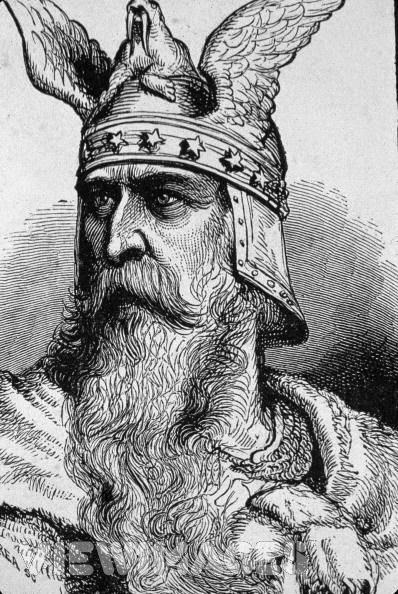
(I mean, look at these two. Leif Erikson looks pretty cool and very tough. We should totally celebrate him)


Monday, October 13, 2014

The Dissimulation of War

During the 1500s, war broke out across Europe. At first the wars were religious wars. Then they became both religious and political wars. Finally, they became political wars disguised as religious wars. We can see this progression in the defeat of the Spanish Armada and the Thirty Years War.

First up, the Spanish Armada.

This is where war is purely religious: 
The 7 Protestant provinces of the Netherlands wanted independence from Philip, a Spanish, catholic ruler. In order to defeat Philip II the provinces needed help. So, they called for the assistance of Queen Elizabeth, an English, Protestant ruler. 

Also, Mary, a Roman Catholic and Queen Elizabeth’s sister, was accused of plotting to assassinate Elizabeth. Philip II wanted to reunite Catholic Europe, so he was going to support Mary. But, Mary got caught and was beheaded. Philip and the Pope were mad when they heard about this they wanted to fight England.


Here is where religious and political wars get intertwined:
Queen Elizabeth was hesitant about helping the seven provinces because she didn’t want to stir up trouble with Philip, but gave in. The wars in the Low countries were hurting the English economy, the murder of William the Silent eliminated a great Protestant leader, and the collapse of Antwerp appeared to signal a Catholic sweep through the Netherlands. 
Queen Elizabeth is a lot like my brother. He was hesitant about riding the roller coaster.  Circumstances (my family) made him ride the roller coaster. As soon as the roller coaster took off he realized he probably should not have ridden the roller coaster. But, he came off the roller coaster happy and victorious over conquering his fear. See the metaphor? 
Here is where the war becomes political: 
Philip is now not only angry about the killing of Mary, but also because Elizabeth is helping the rebels. He knew that in order to gain back the Netherlands he had to take England out of the picture. Ultimately, land and power is what’s important to these guys.


He needed to consolidate his empire and to do this he could not let anything break away. Philip then sent out the Spanish Armada which we all know was defeated. The English seemed like the underdogs going into this but they came out on top. As a result, the English had a new sense of national spirit and the Spanish came out with a defeatist attitude. 


How it was disguised as religious: 
It seemed like Philip was doing all this for the cause of Catholicism, but he was really doing it for political dominance. 

Now let’s talk about the Thirty Years War:

This is where the war was purely religious: 
Lutheran princes formed a Protestant Union and Catholic princes formed a Catholic League. Each alliance was determined to not let the other get ahead. They were kind of like a fraternity.


Here is where religious and political wars get intertwined:
In Bohemia Ferdinand was the head of the Catholic league and Frederick was the head of the Protestant Union. (What up with the Ferdinands and Fredericks?) The hurling of two of Ferdinands officials by Protestants started the Thirty Years war. The Bohemians were fighting for religious liberty and independence from Habsburg rule because who doesn’t want independence? Oh yeah Scottland (thanks Becky for the connection) Eventually, the Catholics would win in Bohemia. 

Don't mess with the frat. It leads to war. 


Here is where the war becomes political:
In the Danish phase of the war, King Christian IV was protestant and he fought Albert of Wallensteing, a Catholic. They were both fighting for power in the name of religion. Wallenstein wins and therefore the Catholics win. In the Sweden, once again a protestant political power fights a catholic power. The protestants win. France enters the war under Protestants, which is ironic because they are Catholic. They did this because they don’t like the Habsburgs, who’s rulers are Catholic. The Protestants win in France. Much like World War I, there is a tie and nothing changes from the start of the war to the end. 
Peace of Westphalia: Princes could determine the religion of their state. In the Peace of Augsburg, princes could choose from Catholicism or Lutheranism. In the Peace of Westphalia, the option of Calvinism is added. Also the independence of the United Provinces of the Netherlands was acknowledged. 


Not

How it was disguised as religious:
Religion was used as a front for princes who wanted to get out of the thumb of the pope/emperor. It seemed like everyone was fighting for religion but they were not.

Why both wars were disguised as religious:
These wars are showing that political leaders thought it was ok to have a religion, just as long as the religion was the same as theirs. Pluralism was believed to political chaos and that can’t happen.
 
So, political leaders had to fight in the name of religion to gain political power. 


Thursday, October 9, 2014

Protestants and Catholics: not BFFs

One of the main problems with France was their economic base. The government would overtax the weakest class, who could not afford it. They also sold public offices for extra revenue, but then these officers would be exempt from future taxes.

Peoples' differences in religion led to the St. Bartholomew's massacre in France. The Catholics attacked the Protestants for being Protestants, and I don't think they liked it very much.
It got a little graphic…..
*Shields eyes*

This led to the War of the 3 Henrys. It was Catholic Henry of Guise v. Protestant Henry of Navarre v. Henry III, who was a politique. The politiques were moderates who believed that the only way to save France was to restore the monarchy. They, along with Henry IV who converted to Catholicism, helped bring about peace.

The Edict of Nantes gave Huguenots liberty of conscience and worship, but only in select towns. This did not establish an atmosphere of absolute pluralism in France, but it was a step. This was not the hug that the Huguenots needed, it was one of those awkward, insincere hugs that you give to someone you secretly hate.

The Netherlands was a whole other pot of worms. Charles abdicated his provinces to his brother and his son. To his brother Ferdinand he gave Austria and to his son Philip he gave his Spanish territories.
During Philip's rule, there was a civil war between Protestants and Catholics in the Netherlands, as well as a war between all 17 provinces and Spain. The capturing of Antwerp by the Spanish general Farnese  signaled the religious division on the Netherlands.

After 1500, all the Habsburg empire consisted of was Austria; all of the Spanish territories had broken up from the empire.


The newly independent territories formed the United provinces. Elizabeth decided to send them money and food for economic, not religious, reasons. One of the main reasons was because the Low Countries was England's chief market for wool.

And then everyone lived happily ever after…… right?

Wednesday, October 8, 2014

An Account of Mr. Yarnall's Favorite Country

Until this point, we haven't touched much on France's situation. In 1521, the Habsburg-Valois war began. 
When Charles (Habsburg) inherited both Spanish and French land from his parents, France was upset because they wanted more land. What a surprise! 
This war took on an ironic note because the Valois (Catholics) sided with the Protestants to mess with Charles. 
With the Treaty of Cateau-Cambresis, the Habsburg-Valois War ended. The Spanish won and France was now left in an unfortunate situation. Their economy was tanking and there did not look to be a way out. This lead the French government to look to their citizens in order to make money. 
The French government used the people's religious beliefs as tools of the government. The people believed they were supporting and protecting their church but in reality they were financing the government. 
The French also faced problems in regards to religion. Many pious Catholics and nobles were having issues with the way bishops were being chosen. The monarchy picked the best secular leaders and made them bishops even if they did not believe or care in Catholicism. The Catholics were upset because they didn't understand the religion and the nobles were upset because they didn't always get the position. This helped lead to Protestantism gaining momentum in France. 
Catholicism and Protestantism were struggling to become the main religion. Catholicism was technically the main religion but many French noblemen were attracted to Protestantism. Instead of tolerating both religions, many people of the era believed that religious pluralism caused the ruins of a society. 
Two religious could not coexist together because it caused violence and civil disorder. 
The French nobility took advantage of the weakness of the king and began to convert to Protestantism which can only cause more problems in France.